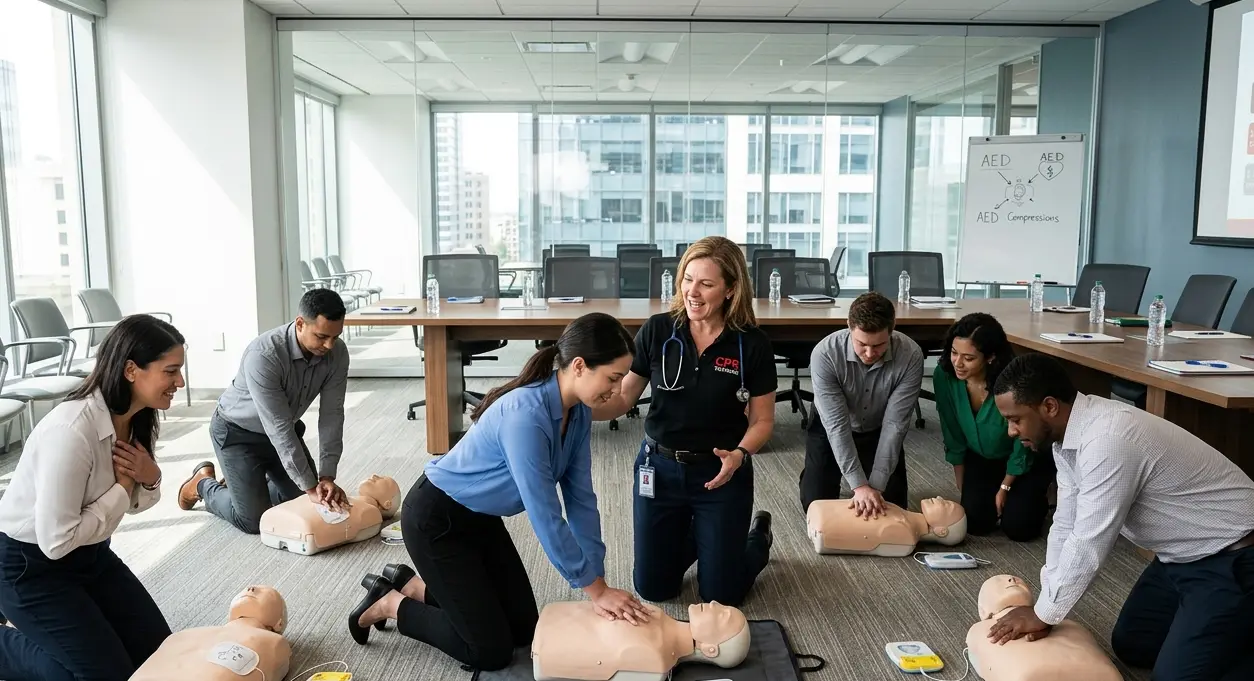
Sending employees to off-site CPR classes one at a time is slow, disruptive, and expensive. The faster approach is bringing the training to your team. On-site workplace CPR training lets you certify a group of employees in a single session, at your location, on your schedule. A-B-CPR in San Diego has been running on-site classes for businesses across Southern California since 1998, and this guide walks you through how the process works.
How On-Site CPR Training Works
The process is straightforward. Here is what it looks like from start to finish:
Step 1: Contact A-B-CPR for a quote. Call (619) 281-3304 or request a quote through the Host a Class page. Let the team know your group size, preferred dates, and which courses you need (CPR/AED, First Aid, BLS, or a combination).
Step 2: Choose your course and schedule. A-B-CPR works around your business hours. Early morning, evening, and weekend sessions are available. Most businesses schedule training during slower periods or split their staff into two groups so operations do not stop.
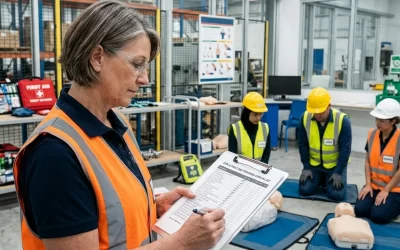
Step 3: Prepare your space. You need a room large enough for hands-on practice. A conference room, break room, or open floor area works. A-B-CPR brings all the training equipment: mannequins, AED trainers, and course materials.
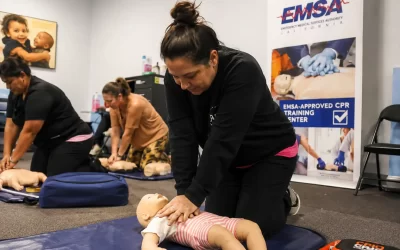
Step 4: Training day. An AHA-certified instructor arrives at your location and runs the class. Courses combine instruction with hands-on skills practice. Every participant practices chest compressions, rescue breathing, AED use, and first aid techniques on professional training mannequins.
Step 5: Certification. Employees who complete the course receive their AHA certification cards, valid for two years. A-B-CPR also provides documentation that employers can use for compliance records.
Scheduling Options
Flexibility is one of the biggest advantages of on-site training. A-B-CPR offers:
- Weekday classes during business hours, early mornings, or after the workday ends.
- Weekend sessions for businesses that cannot pull staff during the week.
- Split sessions where half the team trains in the morning and the other half in the afternoon, keeping your operation running.
- Recurring schedules for businesses that need to certify new hires regularly or recertify staff on a rolling basis.
For San Diego County businesses, A-B-CPR instructors travel to your location. For companies further out in Southern California, travel arrangements can be made for larger groups.
Group Training Logistics
Minimum group size. A-B-CPR typically requires a minimum of 6 participants for on-site classes. There is no strict maximum, but classes above 12 to 15 students are usually split into smaller groups to ensure everyone gets enough hands-on practice time.
Space requirements. Each participant needs enough floor space to kneel beside a mannequin. A standard conference room that seats 10 to 12 people usually works well. Tables and chairs can be pushed aside for the skills portion.
Equipment. A-B-CPR provides all training mannequins, AED trainers, pocket masks, bandages, and course materials. You do not need to purchase anything.
Duration. Depends on the course:
- CPR/AED only: approximately 2 to 3 hours
- CPR/AED and First Aid combination: approximately 4 to 5 hours
- BLS for Healthcare Providers: approximately 3 to 4 hours
Why Workplace Training Makes More Sense Than Individual Classes
Less disruption. Training 10 employees in one on-site session takes half a day. Sending those same 10 employees individually to off-site classes costs 10 separate half-days of lost productivity.
Team familiarity. When coworkers train together, they know who else on their team is certified. In a real emergency, that familiarity speeds up response.
Compliance made simple. One training session generates all your certification records at once. You know exactly when everyone’s card expires and can schedule group recertification before the deadline.
Cost efficiency. Group rates for on-site training are typically lower per person than individual class registrations. For businesses with 10 or more employees who need certification, on-site is almost always the better value.
Customizable content. A-B-CPR instructors can address workplace-specific scenarios during training. A construction company’s first aid concerns are different from a childcare center’s. On-site training allows the instructor to focus on what matters most for your team.
Which Course Is Right for Your Team?
This depends on your industry and compliance needs:
- CPR/AED and First Aid (Heartsaver): The standard for most workplaces. Meets OSHA and Cal/OSHA requirements for general industry, construction, childcare, and more. Learn about OSHA CPR requirements.
- BLS for Healthcare Providers: Required for nurses, EMTs, CNAs, dental staff, and other clinical roles. Covers CPR, AED, bag-valve-mask ventilation, and team resuscitation.
- Pediatric CPR and First Aid: Required for childcare providers under California EMSA regulations. Covers infant and child CPR, choking, and common pediatric emergencies.
Not sure which course your team needs? Check our Cal/OSHA compliance checklist or call A-B-CPR at (619) 281-3304.
Ready to get started? Host a class at your workplace and get a free quote from A-B-CPR in San Diego.
Frequently Asked Questions
How many employees do I need for a group CPR training class?
A-B-CPR requires a minimum of 6 participants for on-site workplace CPR training. For larger groups, classes are split into sessions of 12 to 15 students to ensure every person gets quality hands-on practice time. There is no maximum group size per event, just per session. A-B-CPR in San Diego will work with you to structure the day based on your headcount.
How long does a workplace CPR training class take?
Duration depends on the course. A CPR/AED-only class runs approximately 2 to 3 hours. The combination CPR/AED and First Aid course takes about 4 to 5 hours. BLS for Healthcare Providers runs 3 to 4 hours. A-B-CPR schedules these sessions around your business hours so you can minimize downtime.
What certifications do employees receive from on-site CPR training?
Employees receive American Heart Association certification cards upon successful completion of the course. These cards are valid for two years and are accepted by employers, licensing boards, and regulatory agencies including OSHA, Cal/OSHA, and EMSA. A-B-CPR provides the same AHA certification at your workplace that students receive at their San Diego training centers.
Does A-B-CPR provide all the training equipment for on-site classes?
Yes. A-B-CPR brings everything needed for the class: adult, child, and infant training mannequins, AED trainers, pocket masks, bandages, and all course materials. Your only responsibility is providing a room large enough for the group to practice in. A standard conference room or break room typically works well.