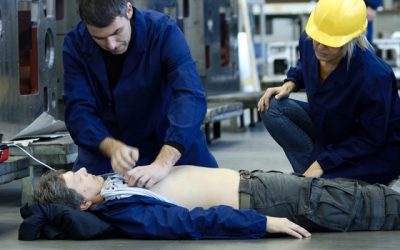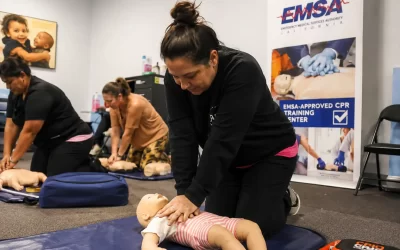
If you need CPR certification in San Diego, you’ve probably encountered two familiar names: the American Heart Association (AHA) and the American Red Cross.
Both offer established CPR and First Aid training programs. But here’s something many students don’t realize: you don’t always need an AHA or Red Cross-branded certification card to meet your training requirements.
For many workplaces, schools, fitness professionals, coaches, and community members, a professionally delivered CPR and First Aid course from an experienced training provider may be an appropriate, more affordable choice.
That’s where A-B-CPR comes in.
With over 25 years of experience providing lifesaving training in Southern California, A-B-CPR offers its own CPR and First Aid certification programs, as well as select official American Heart Association courses.
The important question isn’t which certification has the most recognizable logo.
It’s whether the training teaches the skills you need and provides the credential your employer or organization requires.
Let’s compare AHA, Red Cross, and A-B-CPR certifications so you can make an informed decision and avoid paying more for a credential you don’t actually need.
AHA vs. Red Cross vs. A-B-CPR: What’s the Difference?
All three offer training in emergency response skills, but they issue different certifications.
| A-B-CPR | American Heart Association | American Red Cross | |
|---|---|---|---|
| Certification issuer | A-B-CPR | AHA | American Red Cross |
| CPR and AED training | Yes | Yes | Yes |
| First Aid options | Yes | Yes | Yes |
| Training foundation | A-B-CPR curriculum references 2025 resuscitation guidelines | Official AHA curriculum | Official Red Cross curriculum |
| Hands-on practice | Included in applicable in-person courses | Required for applicable skills-based courses | Required for applicable skills-based courses |
| General workplace use | An option when the employer accepts the credential | An option when the course meets requirements | An option when the course meets requirements |
| Official AHA card | No, for A-B-CPR’s own courses | Yes, for successful completion of official AHA courses | No |
| Cost | Often a more affordable option than comparable AHA-card courses offered by A-B-CPR | Varies by course and provider | Varies by course and provider |
The key takeaway: A-B-CPR’s own certification is a legitimate, separately issued training credential. You don’t necessarily need to pay more for an AHA card unless your employer, licensing organization, or training requirements call for one.
Do You Really Need to Pay More for an AHA CPR Card?
Not necessarily.
It’s easy to assume a more recognizable national name automatically means better training. But CPR training should ultimately be judged by the skills taught, the curriculum followed, the opportunity to practice, and whether the resulting credential meets your needs.
An official AHA course completion card can be essential for someone whose employer specifically requires one. For someone without that requirement, an appropriate A-B-CPR certification can be a smart, cost-effective choice.
Quality CPR Training Isn’t Defined by a Logo
A-B-CPR’s certification programs are built around practical emergency response training and current resuscitation guidance.
Its certification card states that program content is based on 2025 Emergency Cardiovascular Care (ECC) guidance and the 2025 European Resuscitation Council (ERC) Guidelines.
These guidelines address the science and recommended practices underlying lifesaving skills such as recognizing cardiac arrest, performing CPR, and using an automated external defibrillator.
Students completing an applicable A-B-CPR hands-on course must meet the participation and skills-training requirements established for that curriculum.
In other words, an A-B-CPR certification represents training in real emergency response skills—not simply a card with a different logo.
What Are the 2025 CPR Guidelines?
Resuscitation guidelines are developed from ongoing scientific research and expert review.
Two important resources include:
- 2025 American Heart Association Guidelines for CPR and Emergency Cardiovascular Care
- 2025 European Resuscitation Council Guidelines
These publications help inform contemporary resuscitation practices and education.
A-B-CPR identifies current guideline-based science as a foundation for its own training programs. However, following published guidance does not make an independently issued A-B-CPR card an official AHA or ERC credential.
That’s an important distinction—but it doesn’t mean an AHA-branded card is necessary for every student.
Why Can A-B-CPR Certification Cost Less?
A-B-CPR offers its own certification programs alongside official AHA courses.
By choosing an A-B-CPR-issued certification when it’s appropriate for your needs, you may be able to save money compared with enrolling in a course that includes an official AHA credential.
That doesn’t mean sacrificing the opportunity for hands-on instruction or practical CPR skills.
It means selecting a course and certification that match your requirements instead of automatically purchasing a particular national-brand credential.
Prices vary by course and format, so compare the current options before enrolling.
Our philosophy is simple: Get the training you need, earn the certification that meets your requirements, and don’t pay extra for a different credential unless you need it.
Is A-B-CPR Certification as Good as AHA Certification?
For many general workplace and community training needs, A-B-CPR certification can be an excellent choice.
The company’s own certification programs include practical CPR and First Aid instruction grounded in current resuscitation guidance. Students receive the credential associated with the specific course they successfully complete.
The biggest consideration is whether the receiving organization accepts that credential.
For example:
- An office employee may be able to use an A-B-CPR CPR and First Aid certification.
- A fitness instructor may have several accepted CPR certification options.
- A school or youth sports organization may specify its own accepted providers.
- A hospital employee may be explicitly required to hold an official AHA BLS Provider card.
A-B-CPR certification and official AHA certification are not identical credentials. But when your employer accepts the A-B-CPR course, there may be no practical reason to purchase a more expensive AHA-card course solely for the name.
If you’re unsure which card your job requires, ask your employer before registering.
Explore A-B-CPR CPR and First Aid certification classes to see available training options.
When Is an Official American Heart Association Card Necessary?
There are situations where the credential issuer matters.
Some employers, particularly in healthcare, specifically require official American Heart Association certification.
In these cases, an A-B-CPR-issued card is not a substitute for the required AHA credential, even if the courses address similar underlying CPR skills.
Healthcare Professionals
Nurses, EMTs, CNAs, dental professionals, medical students, and other healthcare workers may need Basic Life Support (BLS) certification.
Many healthcare employers specifically request an AHA BLS Provider course completion card.
If that’s your requirement, the correct choice is an official AHA BLS course.
The good news is that A-B-CPR offers official AHA certification too.
As an American Heart Association Training Site, A-B-CPR provides AHA BLS certification for healthcare providers in San Diego County.
You can get the specific credential your employer requires while training with A-B-CPR.
Employers That Require AHA by Name
Some businesses, schools, agencies, and professional programs specify AHA certification in their written requirements.
If your requirements explicitly say “American Heart Association,” choose the corresponding official AHA course.
Don’t assume that a different CPR certification will be accepted without confirming first.
When the Exact Card Is Not Specified
If your employer simply asks for CPR or CPR/First Aid certification, you may have more flexibility.
Ask whether an A-B-CPR certification is accepted and whether hands-on skills training is required.
You may find that a professionally delivered A-B-CPR course provides the training and documentation you need at a lower cost.
What About American Red Cross CPR Certification?
The American Red Cross is another established provider of CPR, AED, First Aid, and emergency response training.
Red Cross certifications may be accepted by employers, schools, and organizations depending on their individual requirements.
Like AHA, Red Cross offers its own courses, curricula, and issued credentials.
When Should You Choose Red Cross?
Red Cross may be the right choice when:
- Your employer specifically requires a Red Cross certificate.
- Your organization uses an approved Red Cross training program.
- You need a particular Red Cross course that meets your requirements.
- You’re pursuing lifeguarding or aquatic safety qualifications that specify Red Cross training.
Red Cross and Lifeguarding
The Red Cross is well known for its Lifeguarding programs.
For many aquatic positions, a general CPR certification alone is not sufficient. Employers may require a complete lifeguarding qualification covering water rescue and other specialized skills.
If you’re applying to become a lifeguard, confirm the precise credential required by the facility.
See the American Red Cross Lifeguarding program for more information.
Which CPR Certification Is Best for Your Job?
The right credential depends on your responsibilities and any applicable training requirements.
Office Workers, Construction Employees, and General Workplaces
For many general workplaces, CPR, AED, and First Aid instruction is an important part of emergency preparedness.
A-B-CPR’s own certification programs can be a cost-effective option when they meet the employer’s training and documentation requirements.
Businesses looking to train multiple employees can arrange on-site CPR and First Aid group training throughout Southern California.
Personal Trainers, Fitness Professionals, and Coaches
Fitness professionals, youth sports coaches, and recreation employees often need CPR and AED training.
Some employers and professional organizations accept a range of training providers, while others have specific requirements.
Before registering, confirm which certifications your organization recognizes.
If an A-B-CPR-issued card is accepted, a CPR and AED training course may be an appropriate option.
Healthcare and Dental Employees
Healthcare workers may need official AHA BLS certification rather than a general workplace CPR credential.
For medical practices and dental offices with multiple employees, A-B-CPR can also coordinate on-site dental CPR and BLS training.
Teachers and School Staff
School employees have different training responsibilities depending on their roles and school policies.
Some positions require specific pediatric CPR, First Aid, or emergency response courses.
Check the requirements of your district, employer, or licensing program before selecting a certification.
Parents, Grandparents, and Community Members
If your goal is to learn CPR to protect your family or respond to an emergency, an official AHA-branded card may not be necessary.
A hands-on CPR course can provide valuable emergency response skills.
A-B-CPR’s CPR and AED programs offer training options for individuals looking to become more prepared.
California Childcare CPR: A Special Case
California childcare training deserves separate consideration because applicable licensed childcare providers must meet specific training requirements.
The California Emergency Medical Services Authority (EMSA) oversees approval of certain childcare CPR, First Aid, and Preventive Health and Safety training programs.
This means choosing an appropriate childcare course matters more than simply comparing AHA and Red Cross logos.
A-B-CPR Offers Two Childcare Training Options
1. Fully In-Person EMSA-Approved Childcare Training
A-B-CPR provides an EMSA-approved, fully in-person pediatric CPR and First Aid program for childcare providers.
This program provides the certification associated with A-B-CPR’s approved course. It does not automatically issue an AHA card.
2. Blended AHA Heartsaver Pediatric Training
A-B-CPR also offers a blended pediatric course combining online instruction with an in-person skills session.
Successful participants receive an official American Heart Association Heartsaver Pediatric First Aid CPR AED course completion card.
The two pathways have different course formats and certification issuers, with different pricing.
Choose the program that meets your specific childcare training and licensing needs.
Compare A-B-CPR’s childcare CPR and First Aid training options.
Does OSHA Require an AHA or Red Cross CPR Card?
Not universally.
OSHA and Cal/OSHA requirements depend on the industry, workplace conditions, employee responsibilities, and applicable regulations.
A particular national certification logo is not a universal requirement for every workplace First Aid or CPR course.
What matters is whether the selected training program satisfies the applicable training requirements and provides the skills and documentation the workplace needs.
That makes it important to distinguish a course that meets a workplace’s requirements from a specific card issuer required by an employer or regulator.
A-B-CPR provides workplace CPR, AED, and First Aid training options for organizations that want practical instruction and appropriate certification documentation.
Employers should review their specific requirements before choosing a course.
For information about organizing training for your team, read How to Host CPR Training at Your Workplace.
Can You Take CPR Certification Online?
Some CPR and First Aid training programs are available online, while others require hands-on skills instruction.
Whether an online-only course is appropriate depends on the employer, licensing agency, and credential being requested.
A blended course combines online coursework with an in-person skills session.
If your employer specifically requires hands-on CPR training or an official AHA course completion card, verify that the course format meets those requirements before enrolling.
A-B-CPR offers classroom and blended training through its San Diego County locations.
For self-paced options, you can also explore A-B-CPR Online Training.
Frequently Asked Questions About AHA, Red Cross, and A-B-CPR Certification
Is A-B-CPR certification as good as American Heart Association certification?
A-B-CPR provides hands-on CPR and First Aid certification programs grounded in current resuscitation guidance, including the 2025 ECC and European Resuscitation Council guidelines referenced in its curriculum.
For many general workplace and community training needs, A-B-CPR certification can be an excellent, cost-effective option when the employer or organization accepts it.
The credentials are issued by different organizations and are not automatically interchangeable. If you specifically need an official AHA card, A-B-CPR offers those courses as well.
Why is A-B-CPR certification more affordable than some AHA courses?
A-B-CPR issues its own certification cards for its separate training programs. Depending on the courses being compared, choosing A-B-CPR certification can reduce the cost of obtaining an appropriate credential.
The programs have their own curricula, formats, and requirements, so prices aren’t determined by branding alone. Compare the specific course and credential before registering.
Does A-B-CPR follow current CPR guidelines?
A-B-CPR’s certification card states that its curriculum is based on 2025 emergency cardiovascular care and European Resuscitation Council guidance.
Participants must meet the applicable participation and skills-training requirements to successfully complete the program.
Following those guidelines does not make its independently issued cards official AHA cards.
Will my employer accept A-B-CPR certification?
Many employers and organizations may accept CPR training from providers other than AHA or Red Cross, depending on their requirements.
However, acceptance is determined by the employer, licensing body, or applicable regulation. Confirm the required course and certification issuer before enrolling.
Do I need an AHA card to work in a hospital?
Some healthcare employers explicitly require an official AHA BLS Provider card. Others may specify different accepted credentials.
Check with your employer or educational program. If AHA BLS is required, A-B-CPR offers official AHA BLS courses.
Is Red Cross CPR certification the same as AHA certification?
No. AHA and Red Cross issue their own credentials and follow their respective course requirements.
Some employers accept either. Others specifically require one or the other.
Is A-B-CPR certification OSHA-approved?
OSHA does not provide blanket approval of CPR certification cards from individual training providers.
A-B-CPR offers workplace CPR and First Aid training programs. Employers should confirm that a selected course meets the training requirements applicable to their workplace.
Does A-B-CPR issue official AHA cards?
Yes, for applicable official American Heart Association courses, including BLS for Healthcare Providers.
A-B-CPR is an AHA Training Site and also offers its own separate CPR and First Aid certification programs.
The card you receive depends on the course you select.
Does California childcare CPR certification require an AHA card?
Not necessarily. Applicable California childcare training requirements involve approved training programs and specified skills.
A-B-CPR offers a fully in-person EMSA-approved childcare program and a blended option that issues an official AHA Heartsaver Pediatric course completion card.
Check the current requirements for your childcare role before registering.
How long is CPR certification valid?
Many CPR and BLS certification cards are valid for two years.
Always check the specific credential’s expiration date and any employer or licensing renewal requirements.
Get the CPR Certification You Need—Without Paying for What You Don’t
The American Heart Association and American Red Cross are established organizations with respected training programs.
But a recognizable certification brand isn’t the only consideration when choosing quality CPR training.
A-B-CPR’s own certification programs provide practical CPR and First Aid instruction informed by current resuscitation guidelines, with hands-on skills training and course-specific completion requirements.
For many general workplace and community needs, an A-B-CPR certification may be an appropriate and more affordable option.
And if your employer requires an official American Heart Association card, A-B-CPR offers that too.
With over 25 years of experience and training locations in San Diego’s Mission Valley and Oceanside, A-B-CPR can help you choose the course that matches your needs.
Explore CPR & First Aid Certification Classes
Request Group Training for Your Workplace
Not sure which certification you need? Call (619) 281-3304 and we’ll help you select the appropriate course.
The right training. The right certification. A better value when you don’t need to pay more for a particular brand.